




 русский
 فارسی
فارسی العربية
 English
 Milk
Milk  Cheese
  Cream
Cream  Juice
Juice  Doogh/Whey
  Powder
  Butter
 Understanding Milk Protein Denaturation in Dairy Processing
A practical overview of milk protein denaturation, its causes, effects, and importance in dairy processing.
Milk is a complex food system containing proteins, fats, lactose, minerals, and water. Among these components, milk proteins play an important role in determining the nutritional, physical, and functional properties of dairy products.
During dairy processing, milk is commonly exposed to heat, particularly during pasteurization, UHT treatment, evaporation, and other thermal processes. These treatments are essential for improving microbiological safety and extending shelf life, but they can also change the structure and functionality of milk proteins.
One of the most important changes is protein denaturation.
Understanding milk protein denaturation is essential for dairy processors because changes in protein structure can influence milk stability, viscosity, gel formation, solubility, texture, and the performance of the final dairy product.
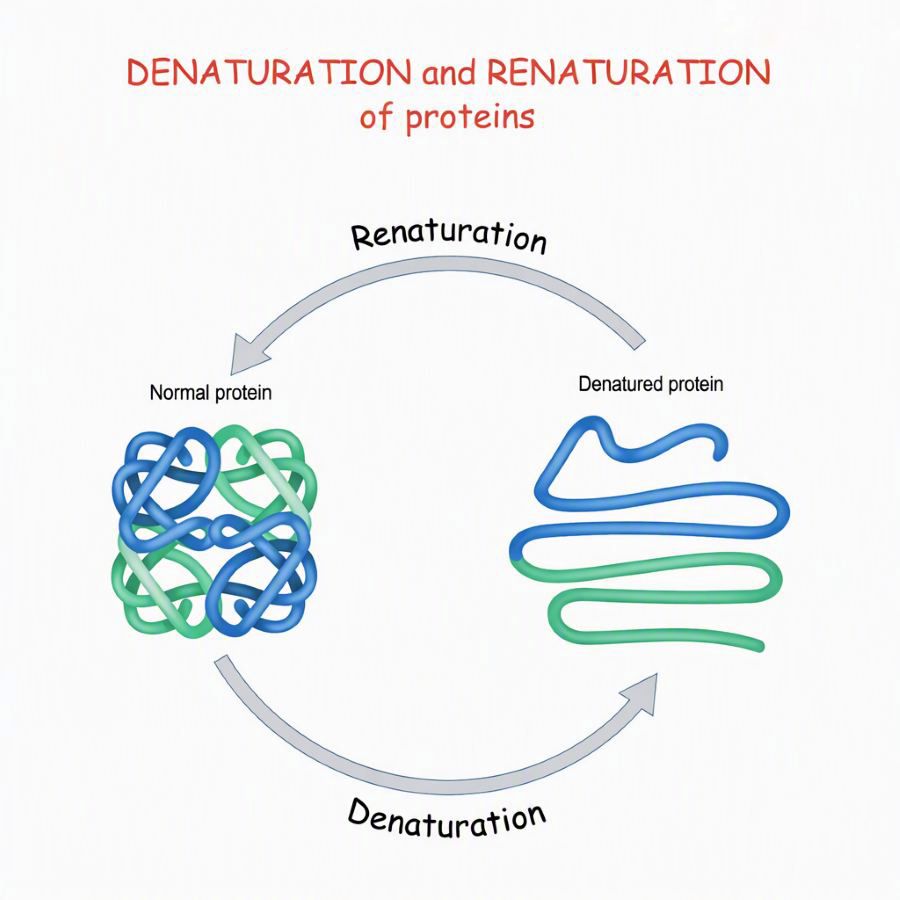
What Is Milk Protein Denaturation?
Protein denaturation is a structural change in which a protein loses part or all of its native three-dimensional structure without necessarily breaking its primary peptide chain.
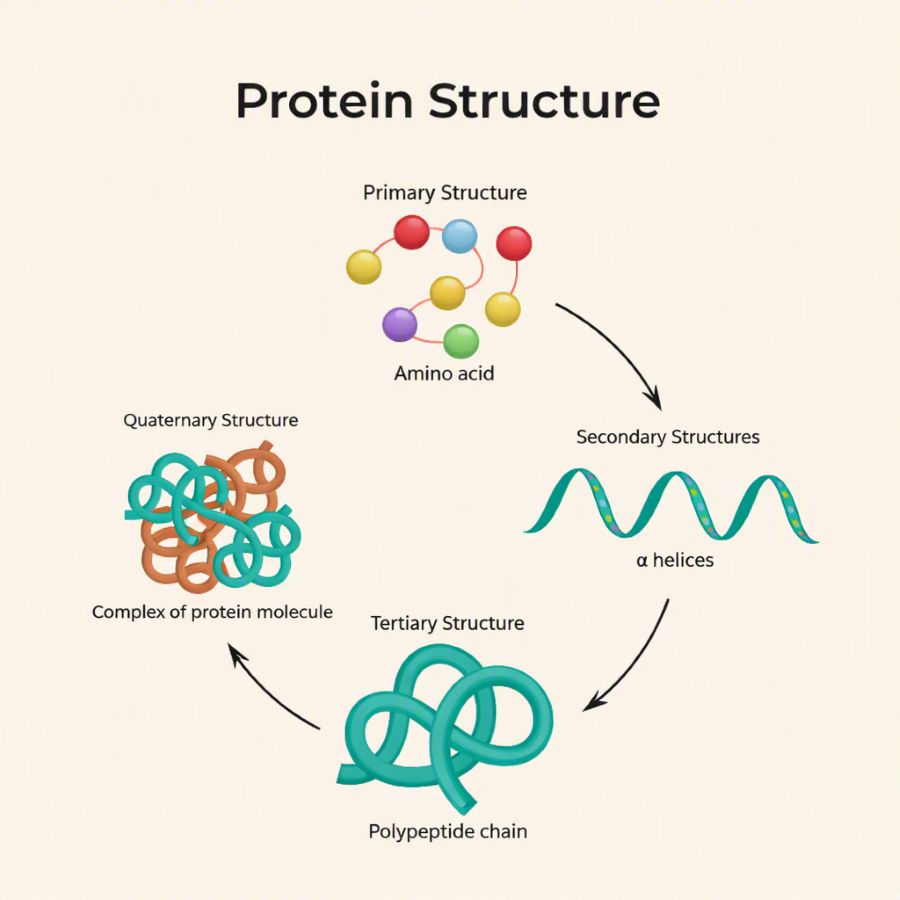
In their native state, proteins have specific three-dimensional structures that determine how they behave and interact with other components. When conditions such as heat, changes in pH, ionic strength, or other processing factors disturb these structures, the protein may unfold.
This process is known as denaturation.
Denaturation does not necessarily mean that the protein is destroyed. Instead, the protein's structure and interactions can change, which may alter its functional properties.
In milk, these changes are particularly important because unfolded proteins can interact with other proteins, minerals, and components of the milk system.
Milk Proteins: Casein vs. Whey Proteins
Milk proteins are generally divided into two major groups:
-
Caseins
-
Whey proteins
Caseins account for approximately 80% of the proteins in cow's milk, while whey proteins make up most of the remaining protein fraction.
The two groups behave differently during heat treatment.
Caseins
Caseins include:
-
αs1-casein
-
αs2-casein
-
β-casein
-
κ-casein
They are organized primarily into structures known as casein micelles.
Unlike globular whey proteins, caseins have relatively flexible structures and are considerably more resistant to heat-induced unfolding under normal dairy-processing conditions.
However, severe heating can still cause important changes in casein micelles, including changes in mineral balance, protein interactions, micelle structure, and association with denatured whey proteins.
Whey Proteins
The major whey proteins include:
-
β-lactoglobulin
-
α-lactalbumin
-
Bovine serum albumin
-
Immunoglobulins
Among these proteins, β-lactoglobulin is particularly important when discussing heat-induced denaturation in milk.
When exposed to sufficient heat, whey proteins can unfold and expose previously buried reactive groups. These unfolded proteins can then interact with each other or with casein micelles.
This is one of the key mechanisms through which heat treatment changes the physical properties of milk.
What Happens to Milk Proteins During Denaturation?
Protein denaturation can be viewed as a sequence of structural changes.
1. The protein unfolds
When sufficient energy is supplied, the forces maintaining the protein's native structure are disrupted.
The protein begins to unfold, exposing parts of its structure that were previously buried.
2. Reactive groups become exposed
Unfolding can expose hydrophobic regions and reactive sulfhydryl groups.
These exposed groups increase the possibility of interactions between proteins.
3. Proteins begin to interact
Once unfolded, proteins can interact through several types of interactions, including hydrophobic interactions and disulfide bonding.
4. Aggregation may occur
Denatured proteins can associate with one another and form larger structures known as aggregates.
In milk, denatured whey proteins can also interact with casein micelles.
One particularly important interaction involves β-lactoglobulin and κ-casein.
This interaction can substantially influence the stability and functionality of heated milk.
What Causes Milk Protein Denaturation?
Several processing and environmental factors can influence protein denaturation.
The most important factors include:
-
Temperature
-
Heating time
-
pH
-
Calcium concentration
-
Ionic strength
-
Protein concentration
-
Milk composition
-
Processing conditions
These factors do not operate independently. A change in one condition can alter how proteins respond to another.
The Role of Temperature and Heating Time
Temperature is one of the most important factors controlling protein denaturation.
In general, increasing the temperature and extending the heating time increases the degree of whey protein denaturation.
However, the relationship is not simply about temperature alone. The combination of temperature × time determines the overall thermal load applied to the milk.
For example, pasteurization exposes milk to substantially less severe thermal conditions than UHT processing. Consequently, the degree and type of protein changes can differ considerably.
Research has shown that increasing both heating temperature and treatment time increases whey protein denaturation and the formation of whey protein–casein complexes.
This is why dairy processors carefully control thermal treatment conditions rather than simply applying the highest possible temperature.
The Effect of pH on Protein Denaturation
pH has a major influence on protein stability.
Changing pH changes the electrical charges on protein molecules and therefore affects the attractive and repulsive forces between them.
It can also influence the interaction between denatured whey proteins and casein micelles.
Milk normally has a pH close to 6.6–6.8. Small changes around this region can influence heat stability and the behavior of casein micelles during heating.
At different pH values, whey proteins may show different levels of aggregation and different patterns of association with casein.
Therefore, pH control is an important part of managing protein stability during dairy processing.
The Role of Calcium and Ionic Strength
Milk naturally contains calcium and other mineral components that contribute to its structure and stability.
Calcium can affect protein interactions during heating, particularly the aggregation behavior of β-lactoglobulin.
The effect is complex because calcium can influence both protein unfolding and the subsequent aggregation of unfolded proteins.
Ionic strength also affects electrostatic interactions between protein molecules. Changes in the concentration of salts and minerals can therefore modify the way proteins behave during heating.
This means that the mineral environment of milk is an important consideration when developing or optimizing thermal processing conditions.
Protein Denaturation During Pasteurization
Pasteurization is primarily designed to reduce pathogenic and spoilage microorganisms while maintaining the desired quality of milk.
Common pasteurization conditions involve relatively moderate thermal exposure compared with UHT processing.
Under these conditions, whey proteins can undergo some degree of denaturation, while casein micelles generally maintain their basic structure.
The extent of protein denaturation depends on the exact temperature, holding time, milk composition, and processing conditions.
For dairy manufacturers, the objective is to achieve the required microbiological safety without creating unnecessary changes in milk functionality.
Protein Denaturation During UHT Processing
UHT processing uses substantially higher temperatures for a very short period.
Typical UHT processing conditions are around 135–150°C for only a few seconds, depending on the process and product.
The high thermal intensity produces much greater changes in whey proteins than conventional pasteurization.
During UHT treatment, whey proteins can unfold and form complexes with casein proteins. These changes can contribute to changes in milk stability during processing and storage.
If the protein system becomes unstable, phenomena such as sedimentation, aggregation, fouling, or age gelation can become important technological concerns.
This is particularly relevant for UHT milk and high-protein dairy beverages, where maintaining long-term physical stability is an important processing challenge.
How Does Protein Denaturation Affect Dairy Products?
Protein denaturation is not simply a laboratory phenomenon. It has direct consequences for the properties of dairy products.
Depending on the product and processing conditions, denaturation can affect:
Texture
Protein interactions influence viscosity, gel structure, firmness, and mouthfeel.
This is particularly important in products such as yogurt and other fermented dairy products where protein interactions contribute to the final structure.
Solubility
Extensive aggregation can reduce protein solubility or produce larger protein particles.
This can be important in concentrated dairy systems and products requiring rapid rehydration or stable dispersions.
Heat Stability
The interaction between whey proteins, casein micelles, minerals, and other components influences the ability of milk to withstand further heating without aggregation or coagulation.
Viscosity
Protein aggregation can increase the size of dispersed particles and change the flow behavior of milk systems.
Gel Formation
Controlled protein denaturation can contribute to the formation of desirable protein networks.
This is one reason why heat treatment can be intentionally used to modify the functionality of milk proteins.
Storage Stability
Protein changes can continue after thermal processing.
In UHT milk, for example, protein interactions during storage can contribute to age gelation, sedimentation, and other stability problems.
Is Protein Denaturation Always Undesirable?
No.
This is an important distinction in dairy processing.
Protein denaturation is not inherently good or bad. Its technological value depends on the degree of denaturation, the type of protein involved, and the product being manufactured.
In some applications, controlled denaturation is desirable because it can improve specific functional properties.
For example, heat-induced whey protein denaturation can contribute to improved gelation and texture in certain fermented dairy products.
On the other hand, excessive or uncontrolled protein aggregation can create undesirable effects such as fouling, sedimentation, excessive viscosity, or gelation during storage.
Therefore, dairy processing is often about controlling protein changes rather than simply preventing them.
Protein Denaturation and Dairy Product Quality
The relationship between protein structure and product quality is particularly important in modern dairy processing.
A processor may need to balance several objectives at the same time:
-
Microbiological safety
-
Shelf life
-
Protein functionality
-
Physical stability
-
Texture
-
Flavor
-
Processing efficiency
Increasing the thermal intensity may improve microbial safety and shelf stability, but it can also increase protein modifications.
This creates a need for carefully optimized processing conditions.
For this reason, understanding protein denaturation helps dairy manufacturers select appropriate combinations of temperature, time, pH, and formulation conditions.
How Dairy Processors Control Protein Denaturation
Dairy manufacturers can influence protein denaturation by controlling several processing parameters.
Optimizing Temperature and Time
The thermal process should provide the required microbiological effect while avoiding unnecessary thermal damage.
Controlling pH
Maintaining an appropriate pH helps control protein interactions and overall milk stability.
Managing Mineral Balance
Calcium, phosphate, citrate, and other minerals can affect the interactions between proteins and influence heat stability.
Controlling Protein Concentration
Protein concentration can influence aggregation, viscosity, and gel formation.
This becomes particularly important in concentrated milk, milk protein concentrates, and high-protein dairy beverages.
Selecting Appropriate Processing Technology
Conventional heating is not the only approach available to the dairy industry.
Research is also investigating technologies such as high-pressure processing, ultrasound, pulsed electric fields, ohmic heating, and other non-thermal or emerging processing technologies to modify dairy protein functionality.
The objective is not necessarily to eliminate protein structural changes, but to achieve the desired functionality while maintaining product quality.
Why Milk Protein Denaturation Matters in the Dairy Industry
Milk protein denaturation connects molecular-level changes with practical processing outcomes.
A change that begins at the protein structure level can ultimately affect:
Heat stability → aggregation → viscosity → texture → storage stability → product quality
For dairy manufacturers, understanding these relationships can help optimize processing conditions and reduce problems such as fouling, sedimentation, unwanted gelation, and loss of functionality.
At the same time, controlled protein modification can be used to develop dairy products with specific textural and functional characteristics.
Conclusion
Milk protein denaturation is a fundamental phenomenon in dairy processing.
Whey proteins, particularly β-lactoglobulin, are highly responsive to thermal treatment, while casein micelles show greater resistance to heat-induced unfolding under typical processing conditions. However, heating can still alter casein micelle structure and promote interactions between caseins and denatured whey proteins.
Temperature and heating time are among the most important factors affecting denaturation, while pH, calcium, ionic strength, protein concentration, and milk composition also influence the final outcome.
For dairy manufacturers, the key is not simply to prevent protein denaturation. Instead, the goal is to control the extent and consequences of protein modification according to the requirements of the final product.
A clear understanding of milk protein denaturation therefore provides an important foundation for optimizing pasteurization, UHT processing, dairy formulation, product stability, and overall dairy quality.
Related Blogs
.webp)
.webp)
.webp)